



A bus full of tourists is not just a bus full of cameras and sunglasses.
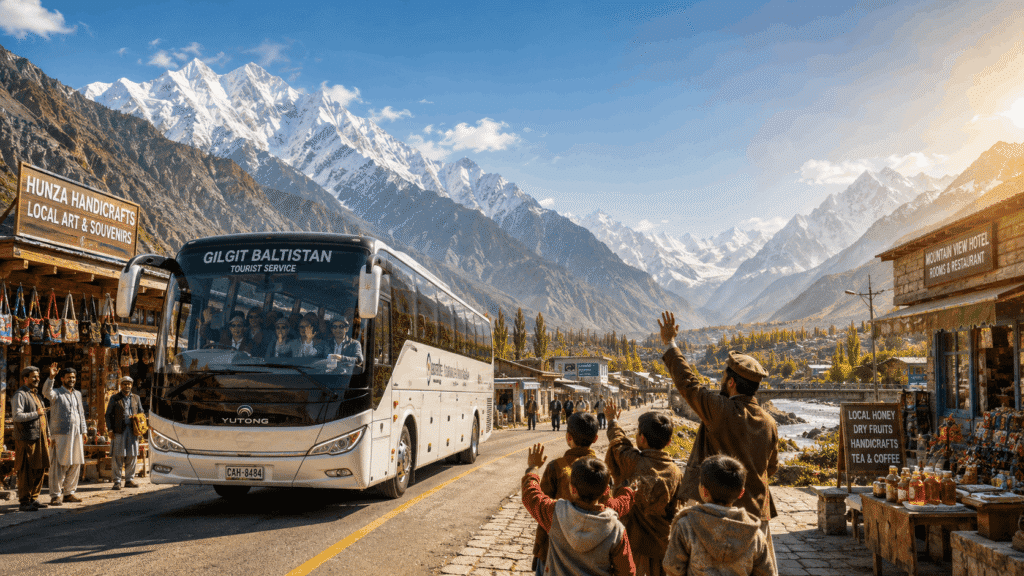
For a village in Gilgit Baltistan, that same bus is carrying next month’s school fees, winter firewood, and medicines for families who need them most.
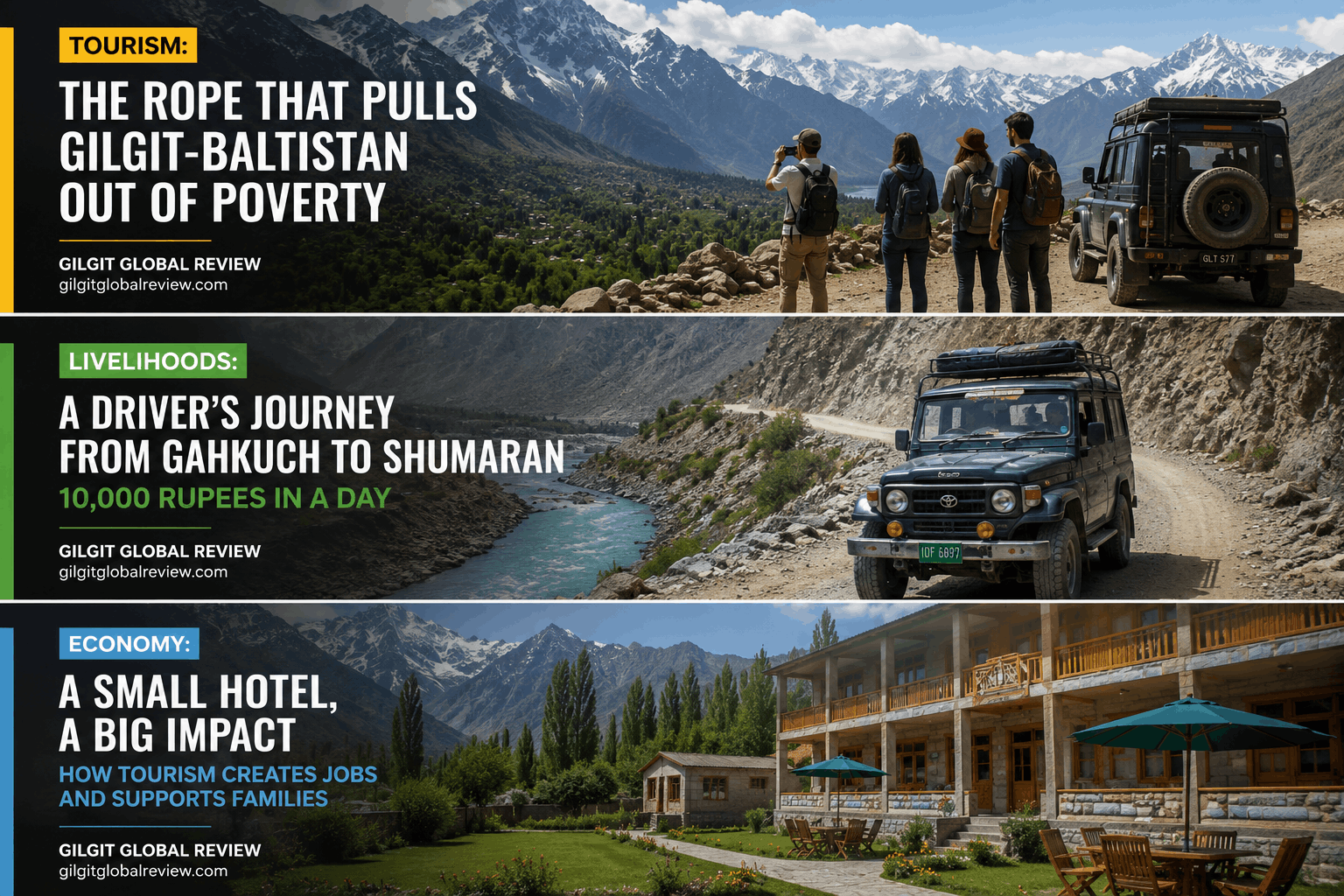
Tourism in Gilgit Baltistan has quietly become the strongest rope pulling countless families out of poverty, and most of the world has no idea.
Small Rooms, Big Change
Every tourist needs a peaceful environment and a fresh plate of trout fish. That simple need has created something remarkable. Small guest houses have been established in nearly every valley from Kashghar to PTDC Phander and beyond.
A single hotel with just five rooms gives work to fifteen young people, providing them with a steady income they might never have found otherwise. Many hotel staff take on extra shifts, work harder, and take home more money as the season grows busier.
Across Gilgit Baltistan, and particularly in the Ghizer Valley, people have discovered that even a single rented room can change the financial reality of an entire household.
The Road is the Business
One of the most meaningful ways tourists create income here is through the roads themselves.
Because of the rugged mountain terrain, tourists rely entirely on local jeeps and experienced local drivers who know every turn and every rock of these ancient roads. A driver travelling from Gahkuch to Shumaran can earn ten thousand rupees in a single day.
In the summer peak season, that same driver makes the journey twice daily. And foreign tourists often tip in dollars, money that goes directly toward a child’s school clothes, uniforms, and books.
These are not numbers on a government report. This is real income changing real lives.
A Third Choice
For generations, boys growing up in Ghizer and Gilgit had only two paths in front of them:
Farm the land their fathers farmed, or leave home and travel south to do hard labour in the cities. There was no third option. No way to stay and build something.
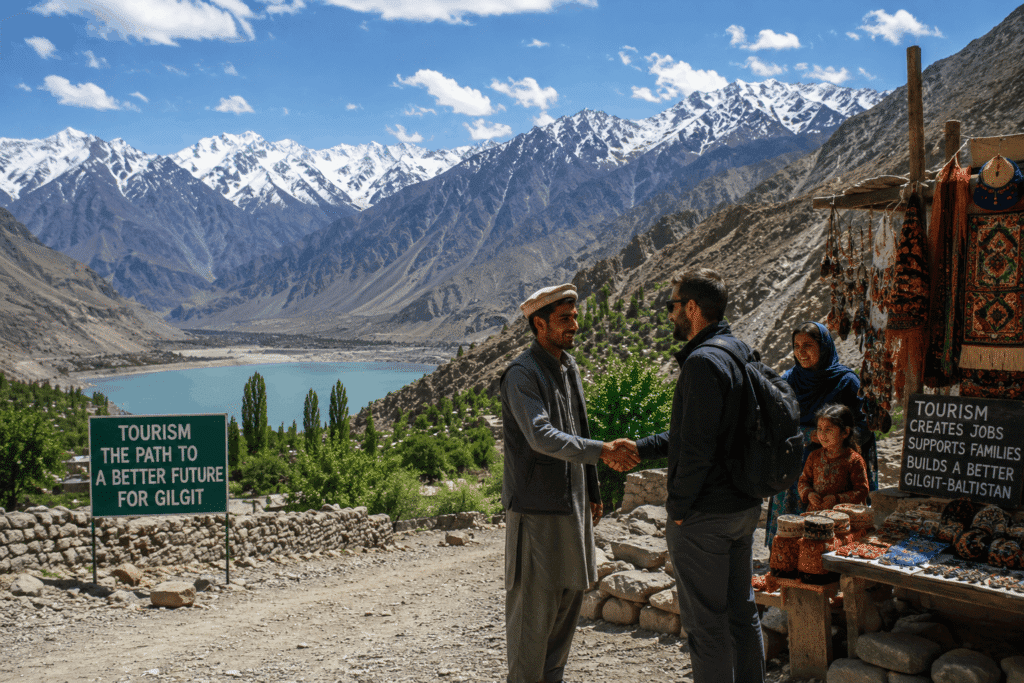
Tourism gave them that third choice.
Today, a young man from a mountain village can stay home, earn a living, and earn respect doing it. A son can become a hotel manager. Even serving tables, something that might seem small, is now a real position, a real income, and a real reason to stay close to family and home.
That is not a small thing. That is everything.
Why is tourism important for Gilgit-Baltistan?
Tourism is one of the most important economic sectors in Gilgit-Baltistan. It creates jobs for hotel owners, tour guides, drivers, shopkeepers, and local artisans, helping many families earn a stable income.
What are the most popular tourist attractions in Gilgit-Baltistan?
Some of the most visited destinations include Hunza Valley, Skardu, Attabad Lake, Fairy Meadows, and Deosai National Park. These locations attract thousands of domestic and international visitors every year.
How does tourism help reduce poverty in Gilgit-Baltistan?
Tourism brings money directly into local communities through accommodation, transportation, food services, handicrafts, and guiding services. As visitor numbers increase, more employment and business opportunities become available, improving livelihoods and reducing poverty in remote areas.
Mashallh, good work is on the way
Great content! Keep up the good work!